Scheppers Instituut Wetteren Chooses Belgian Cloud Technology from whitesky.cloud as an Affordable Alternative to VMware and Horizon View
A Strategic Move Toward Digital Autonomy
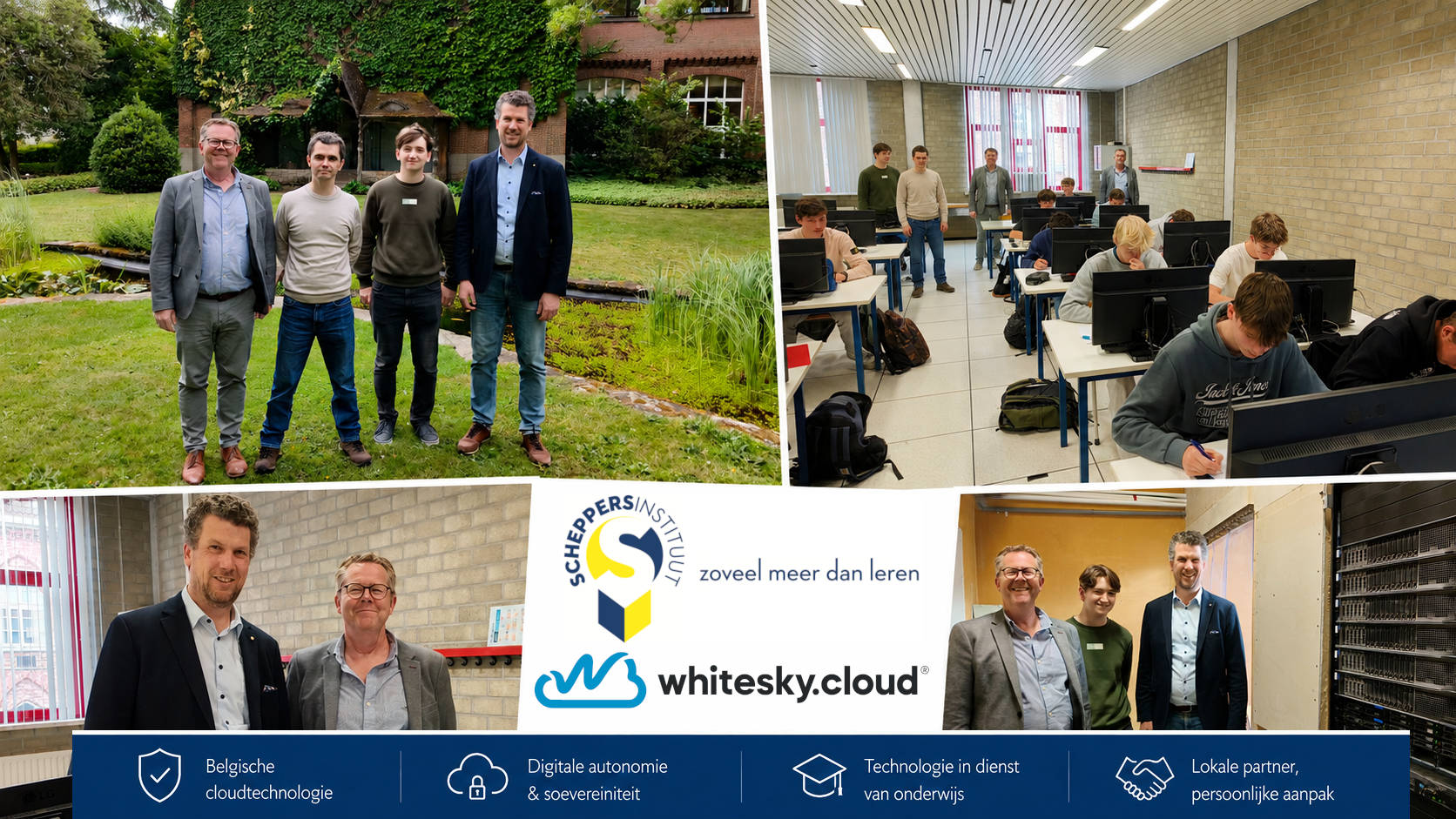
Scheppers Instituut Wetteren has chosen the Belgian cloud solution from whitesky.cloud as an alternative to their existing VMware and Horizon View environment. The technical secondary school, like many other organizations, faced sharply rising VMware license costs following the acquisition by Broadcom.
Rather than a costly renewal or complete infrastructure replacement, the school chose a forward-looking approach: existing hardware was retained one-to-one and revalued within a managed cloudstack from whitesky.cloud.
More Than Just Financial
For Scheppers Instituut Wetteren, this choice was not only financially important but also educational. The school requires a performant VDI environment enabling students to run heavy CAD applications from diverse devices. This keeps technical education accessible without forcing families to purchase expensive laptops.
“Our mission is to provide high-quality technical education in a way that remains financially accessible for families. With whitesky.cloud, we found a partner who not only offered a strong technological alternative to our existing VMware and Horizon environment but also professionally guided us throughout the entire migration process. Thanks to their expertise, commitment, and fast support, we could maximally retain our existing infrastructure investments, significantly reduce our license costs, and continue delivering the performance needed for demanding CAD and graphics applications. The collaboration was characterized by open communication, a pragmatic approach, and a shared focus on the end result.”
— Bart Bruggeman, Technical Director, Scheppers Instituut Wetteren
Existing Infrastructure Fully Retained
A decisive element in the project was that Scheppers Instituut Wetteren did not need to purchase new hardware. The existing infrastructure remained fully intact and was deployed as the foundation for the whitesky cloud environment. This not only avoided additional investment but also maximized the value of the existing infrastructure.
The environment today delivers:
- 105 TB software-defined storage capacity
- 828 vCPU units
- 3,044 GB memory
- 5 TB dedicated flash storage for ultra-low latency IO workloads
Thanks to this capacity, the school can continue offering virtual workstations to students and teachers, with the performance required for technical and graphics applications.
From VMware Dependency to Digital Autonomy
The trigger for the switch was the changed pricing and support context around VMware. The school faced license cost increases of up to 400%, while the future of components like Horizon View became uncertain. For an educational institution that must guarantee stable access to digital learning environments, this created a strategic risk.
Scheppers Instituut Wetteren therefore consciously chose an alternative that better aligns with their long-term vision: affordable technology, local support, and more control over their own digital environment. The choice for whitesky.cloud makes the school less dependent on large international software vendors and strengthens its digital autonomy.
Managed Cloudstack with Local Support
whitesky.cloud delivered not a classic software replacement, but a managed cloudstack on top of the existing infrastructure of Scheppers Instituut Wetteren. The environment was tested and validated for enterprise-grade reliability and demanding CAD workloads.
For the school, this means they retain the benefits of an on-premises environment — control, performance, and data sovereignty — without having to bear all operational complexity themselves. whitesky.cloud handles monitoring, management, and support, with Belgian engineers directly accessible.
“Choosing a local European technology partner requires vision and trust. Together with Björn Galle, IT Coordinator at Scheppers Instituut Wetteren, we developed Desktopspaces, our new generation virtual desktop environment. By combining Scheppers’ expertise with our cloud technology, we built a solution that not only replaces their VMware and Horizon environment but also forms the basis for future innovations within the whitesky platform. The project demonstrates that Belgian organizations can together develop and deploy enterprise-level technology without depending on foreign software vendors.”
— Geert Audenaert, Co-Founder & CTO, whitesky.cloud
Keeping Technology Accessible for Students
For Scheppers Instituut Wetteren, technology serves education. The school wants to give students access to powerful digital learning environments without unnecessarily increasing costs for families. Thanks to the new cloud environment, students can continue working with performant CAD applications while the school keeps its IT costs more predictable.
This realization demonstrates that digital sovereignty does not have to remain an abstract policy concept. By consciously choosing local cloud technology, predictable costs, and retention of existing infrastructure, Scheppers Instituut Wetteren sets a concrete example for other schools, healthcare organizations, local authorities, and businesses facing similar challenges.
About Scheppers Instituut Wetteren
Scheppers Instituut Wetteren is a Belgian Catholic technical secondary school in East Flanders. The school prepares students for programs in applied sciences, technology, engineering, mathematics, and a range of directions within the A and D/A finality. Scheppers Instituut Wetteren aims to keep quality technical education accessible to as many young people as possible.
Related News
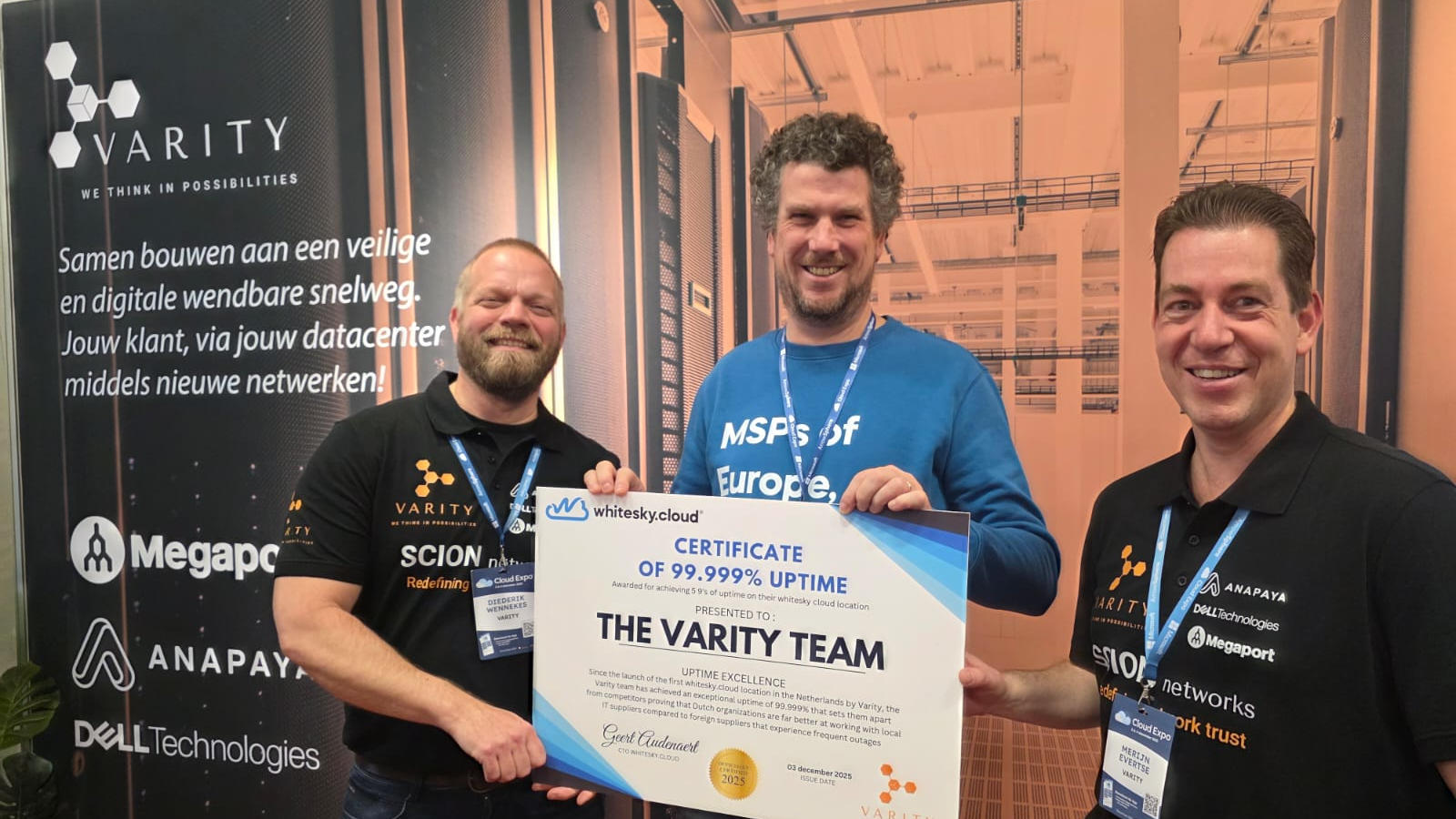
Dutch Sovereign Cloud Platform Reaches 99.999% Uptime
December 3, 2025
Varity and whitesky.cloud jointly demonstrate that American hyperscalers are not required for …