Monetize cloud services with clear usage, margins, and control
In short: whitesky provides built-in billing and licensing for MSPs: usage-based metering per tenant, fixed capacity-based or pay-per-use pricing, automated invoicing, reseller enablement, and SPLA compliance via Octopus integration for Microsoft licensing.
A cloud business only scales if billing and licensing scale with it. whitesky is designed for MSP operations: multi-tenant usage tracking, customer isolation, reseller enablement, and integration points for invoicing and licensing workflows.
whitesky is delivered as a managed service (installation, updates, monitoring and lifecycle management). A software edition for self-operation is planned, at the earliest in 2027.
Usage-based metering (built for MSPs)
whitesky provides a foundation for transparent, auditable usage reporting across tenants and locations, enabling:
- Clear consumption reporting per customer and per service
- Quotas and limits aligned to service plans
- Chargeback/showback models for internal IT or resellers
- Cost visibility across multiple cloud locations
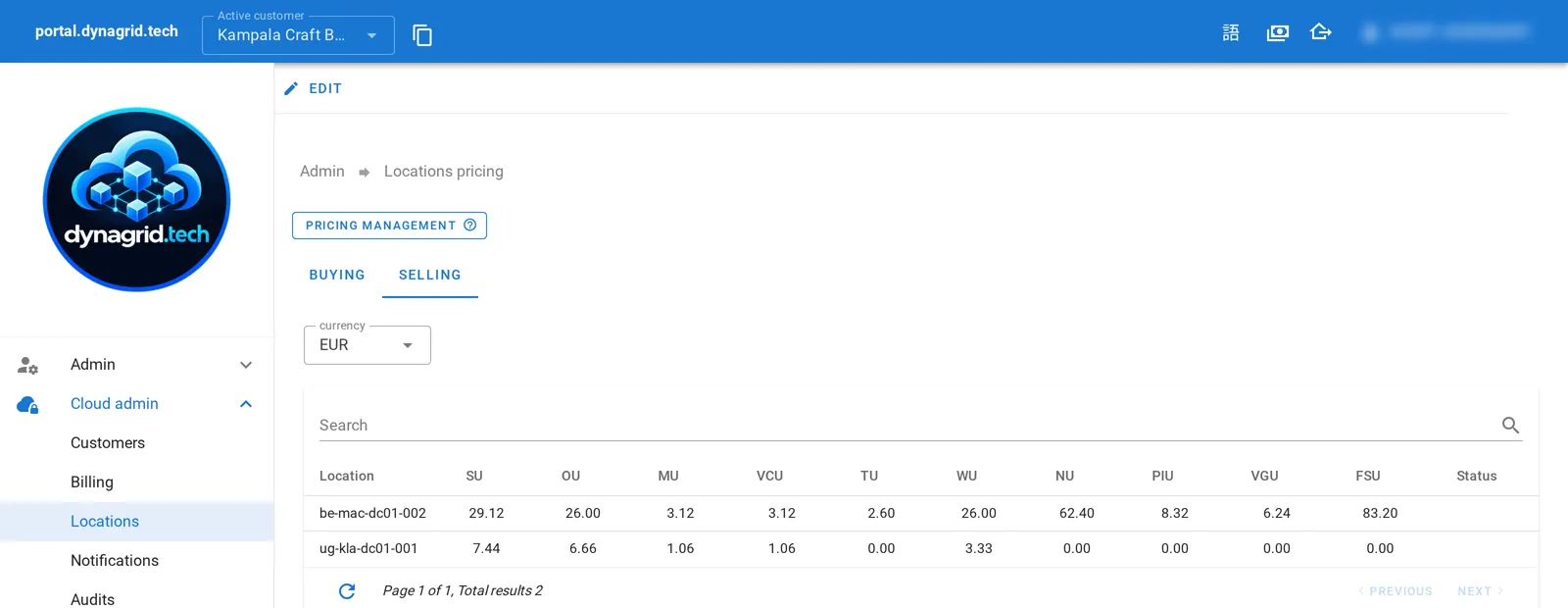
Usage is metered every 15 minutes and invoiced monthly. Cloud Enablers choose between fixed, capacity-based pricing and pay-per-use.
whitesky.cloud charges Cloud Enablers only for storage (SU), vCPU (VCU) and memory (MU) units. Cloud Enablers can charge all units to their VCOs, including network traffic (NU). Per external network, the operator chooses whether traffic is charged, because an external network can be customer-owned, and NU makes no distinction between ingress and egress.
This supports both public cloud offerings and private managed cloud contracts.
Invoicing & billing automation
Depending on your operating model, whitesky can support:
- Automated invoice generation based on usage
- Export/reporting flows for your existing billing stack
- Multi-tenant billing separation for resellers (VCO model)
- Consistent billing across multiple locations
SPLA and licensing workflows (Octopus integration)
Many MSPs use Octopus to automate SPLA and licensing workflows. whitesky enhances that approach with a secure, low-friction data pipeline that keeps licensing transparent and operationally consistent.
Delivery model: included with Meneja (managed service)
When you consume whitesky via the Meneja platform (managed service), you do not need to operate your own Octopus installation. whitesky runs an Octopus environment as part of the service and uses it to process licensing workflows and integrate results into billing.
If required (for example for auditability or operational transparency), customers can be granted access to their own tenant within Octopus.
Self-hosted Meneja (Cloud Enablers)
Self-hosted Meneja installations are possible in specific cases, for example for air-gapped installations; Meneja is not available for download today. Cloud Enablers with their own Meneja installation need their own Octopus installation if they want to use this SPLA workflow feature set.
Nightly license discovery (without customer network access)
whitesky performs a nightly scan of Windows virtual machines to detect installed Microsoft products. The scan is orchestrated from the host side and uses the QEMU guest agent inside the virtual machine to gather the required software inventory data.
The resulting scan output is then exported and transported to Octopus as files. This means Octopus does not need direct access to customer networks — an important security benefit.
With this approach you can:
- scan Windows machines located in private customer networks
- avoid opening inbound paths from Octopus to tenant environments
- keep licensing workflows centralized while maintaining strict network boundaries
Automated SPLA analysis and billing integration
Once received, Octopus analyzes the scan data to determine which Microsoft licenses apply and what needs to be reported/charged.
whitesky then integrates the resulting licensing charges into the billing flow so Microsoft licensing appears automatically alongside resource usage (compute, storage, network traffic where charged, etc.) for the end customer.
Proactive customer notifications to avoid invoice surprises
When the nightly scan detects newly installed licensable software, whitesky can automatically notify the customer’s operational contact by email. This makes customers aware that additional licensed software has been installed and will be charged for.
The goal is to prevent surprises at invoicing time — especially for Microsoft products that can materially impact monthly costs.
Reseller enablement (VCO-ready)
For MSP ecosystems and channel models, whitesky supports a reseller-oriented operating model:
- Resellers can have their own portal experience (white-label)
- Customer isolation and delegated administration
- Consistent service catalog and policies
- Reporting boundaries per reseller and per customer
This allows you to scale distribution without scaling your internal platform engineering.
Governance and auditability
Billing and licensing depend on trust in the numbers. whitesky supports governance through:
- Role-based access control (RBAC)
- Tenant boundaries and clear ownership
- Operational visibility across customers and locations
- Usage reporting designed to be explainable and auditable
Typical use cases
MSPs use whitesky billing & licensing capabilities to:
- Launch branded public cloud offerings with usage-based pricing
- Offer private managed cloud with predictable contracts + usage reporting
- Run reseller programs (VCO model) with clean separation
- Integrate SPLA processes via Octopus and reduce operational overhead
- Provide showback/chargeback for enterprise IT customers
Next steps
- Explore the Cloud Enabler / VCO model
- See how to build your own public cloud with white-label portal + usage reporting
- Request a demo to review billing flows for your business model